

Has it been weeks since you added salt to your water softener, but the level hasn’t changed? Are hard water spots or soap buildup starting to come back?
A salt bridge inside the brine tank may be preventing the system from properly using the salt. Even when the tank looks full, the softener may stop working correctly.
What Is a Salt Bridge?
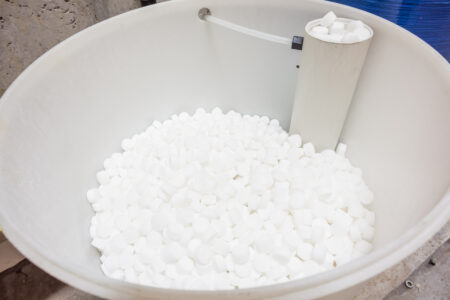
A salt bridge forms when hardened salt creates a solid crust inside the brine tank. In many cases, the top of the tank still appears full of salt even though a hollow gap has formed underneath.
When this happens, the water inside the tank may no longer reach the salt properly to create the brine solution the system needs. As a result, the water softener may stop working effectively.
Signs Your Water Softener May Have a Salt Bridge
Salt bridge problems often develop gradually, which can make them easy to overlook at first.
Common warning signs may include:
- Hard water spots on dishes or fixtures
- Soap struggling to lather properly
- The salt level not dropping over time
- A hardened or crusted surface inside the tank
- Water feeling less soft than usual
How to Check for a Salt Bridge
One simple way to check is by carefully using a broom handle or something similar to test the surface of the salt. If the handle pushes through a hardened top layer and suddenly drops into an open space below, you likely have a salt bridge.
To break up the bridge, carefully use the broom handle to loosen and crack apart the hardened salt layer. Some homeowners also gently tap the outside of the brine tank with a rubber mallet to help loosen buildup along the sides.
Use gentle pressure and avoid pushing too deep into the tank. Most brine tanks are made from plastic, and excessive force could damage the tank or internal components.
Once the hardened salt breaks apart, remove any large chunks if possible and make sure loose salt can settle normally toward the bottom of the tank.
What to Do After the Salt Bridge Breaks
Once the salt bridge is removed, the system can usually begin reaching the salt properly again. Many water softeners will then need a manual regeneration cycle to help restore normal performance and recharge the system. Running the regeneration cycle overnight is often recommended because household water usage tends to be lower during that time.
You should notice improved water softness and normal salt usage inside the tank once the bridge has been cleared.
Why Salt Quality Matters
The type of salt is really important. In many systems, cleaner pellet or evaporated salt products can help reduce residue and buildup compared to lower-grade salt with higher impurity levels.
Humidity and Moisture Can Make Salt Bridges Worse
American Fork and surrounding parts of Utah are generally drier than many other areas of the country, but moisture can still become a problem inside the brine tank under the right conditions.
Salt bridges can happen more easily if the tank stays overly full for long periods or if the system is installed in a humid or poorly ventilated space.
Water softeners located in utility closets, laundry rooms, garages, or enclosed spaces may experience more trapped humidity around the tank, especially during warmer months.
For some, keeping the tank only partially filled instead of completely full may help reduce the likelihood of crystallization and hardened salt buildup.
How to Help Prevent Future Salt Bridges
A few simple habits may help reduce the risk of future salt bridge problems.
- Use high-quality water softener salt
- Avoid overfilling the brine tank
- Check the salt level regularly
- Gently break up small clumps before they harden
- Keep the surrounding area as dry as possible
- Watch for signs of excess humidity near the system
At Gunthers Heating, Cooling, Plumbing and Electrical, we provide water softener services, plumbing maintenance, and water quality solutions for homeowners throughout the American Fork area. Contact us today to schedule an appointment.